Short answer. Vistage, EO, and YPO provide real value: a room of peers, candid accountability, and judgment from owners who have faced hard decisions. The Aldebert diagnostic does a different job. Return to Owner continuously reads the 11 proprietary Business Biomarkers. Its first five establish the MMP floor, then Layer Cake translates that floor into Fixed Cost Capacity, Required Gross Margin dollars, Intended Gross Margin percent, and Breakeven Sales Volume. A peer group plus that shared diagnostic gives members a common language for the business facts underneath the advice.
The Two Different Questions
Peer groups answer: "Who can help me think through this decision?" A Vistage chair, an EO forum, or a YPO peer group can give an owner something isolated operators rarely get: a confidential room, a pattern library, and accountability from people who understand the weight of owning a company. That is not soft value. It changes decisions, especially when the owner is carrying a hard people, growth, succession, or strategic question alone.
The Aldebert diagnostic answers: "What is the common operating reality beneath the decision?" It measures the MMP floor, the Working Capital Gap, the two profitability gates, and the four capacities in a defined sequence. The Business Biomarker Index gives the system a shared reading without exposing the names of the proprietary biomarkers in public copy.
Peer advice gets weak when every member arrives with a different definition of profit, cash, capacity, and risk. One owner reports EBITDA. Another reports tax income. Another knows only their bank balance. The group then offers good experience against partial numbers. Aldebert does not replace the group. It gives the group a common measurement grid so the experience in the room can land on the actual problem.
The owner does not have to choose one lens and abandon the other. The costly mistake is asking a record, a management role, or a peer room to answer a measurement question it was not built to answer. Put each tool in its proper job, and the financial conversation gets clearer immediately.
Side by Side
| Peer Groups (Vistage / EO / YPO) | The Aldebert Diagnostic (RTO + MMP + Layer Cake) | |
|---|---|---|
| Primary job | Community, accountability, and shared owner decision experience | Continuous financial diagnostic and common measurement grid |
| Core question | Who can help me think through this decision? | What operating reality must the decision address? |
| Primary contribution | Peer perspective, challenge, confidential forum, and rhythm | MMP, Working Capital Gap, Layer Cake, and Business Biomarker Index reading |
| Financial language | Varies by member, advisor, reporting system, and industry | Same defined diagnostic sequence for every owner |
| Profitability view | Depends on the numbers a member brings | Tests debt service at the $1.30 rule, then tests working capital |
| Capacity view | Peers may recognize constraints from experience | Reads Labor, Working, Fixed Cost, and Physical Capacity explicitly |
| Output | Better decision-making and accountability | Defensible operating floor and Breakeven Sales Volume |
| Best use | Owners who need a trusted room and peer challenge | Peer groups that want sharper, comparable financial conversations |
A peer group gives you people who have been there. The Aldebert diagnostic gives those people the same shape of number to work from.Jay Aldebert
What Peer Groups (Vistage / EO / YPO) Does Well
Vistage, Entrepreneurs' Organization, and Young Presidents' Organization have earned their place because owners need other owners. A peer group can challenge a blind spot, hold a member accountable to a commitment, and share lived experience from an acquisition, leadership failure, bank negotiation, or family transition. No diagnostic system can reproduce the trust built in a confidential room over time.
The organizations also create rhythm. Meetings happen. Members show up with issues. A chair, forum, or group structure makes it harder for an owner to hide from the decision they keep postponing. That accountability is especially valuable when the owner is the person everyone else inside the company looks to for certainty.
The boundary is measurement. A peer group does not normally diagnose each member's operating floor through a common financial system. Members bring whatever reporting they have. Some have a CFO. Some have a bookkeeper and a tax CPA. Some have an ERP, some have QuickBooks, and some have intuition. The group can offer meaningful advice, but it starts from numbers that do not mean the same thing. That is the gap the Aldebert diagnostic closes.
The right relationship respects that scope. Ask this resource to do the job it was built to do, then give it a current diagnostic reading when the decision depends on the operating floor. Better input makes capable people more useful. It does not diminish their craft.
What the Aldebert Diagnostic Adds
Return to Owner is the continuous diagnostic, a constant blood panel and MRI on the business. It gives every participating owner the same core reading without turning the peer group into an accounting class. The diagnostic reads the 11 proprietary Business Biomarkers. Its first five establish MMP. Layer Cake then moves from MMP through Fixed Cost Capacity, Required Gross Margin dollars, Intended Gross Margin percent, and Breakeven Sales Volume.
The same grid also makes the two profitability gates explicit. Gate 1 is debt service. The company must generate $1.30 of profit for every $1.00 of debt payment under the $1.30 rule. Gate 2 is working capital. A company that clears debt service can still fail structurally if cash is consumed before customer payments arrive. Owner compensation is visible as a third rail. Retirement and exit reserves remain choices above the floor, not tests the business must pass before it can be called profitable.
Now a member can say, "My MMP gap is $150K and working capacity is the first constraint," rather than, "Revenue is up but I feel broke." The peers can bring their experience to a defined condition. That is a much stronger conversation.
This is a measurement discipline, not a new layer of financial theater. The output must change what the owner watches this week and what the leadership team decides next. If the reading does not make the next constraint, the next cash need, and the next required sales number obvious, it has not done its job.
The $10M Test
A $10M contractor brings a $250K net-income number to a peer group. Some members congratulate the margin. Others warn about a slow month. Both reactions are guesses until the floor is known. If the business has a $400K MMP floor, it is under-funded by $150K. The immediate question is no longer whether $250K sounds good. The question is what capacity or cash condition is producing the $150K gap.
The four capacities give the group a disciplined way to work. Labor capacity asks whether productive hours are keeping pace with payroll. Working capacity asks whether cash can carry the commitments made before collections arrive. Fixed Cost Capacity asks whether gross margin covers overhead plus debt service. Physical Capacity asks whether the shop, fleet, or location can carry the intended job flow at a quality standard. Every peer can understand these constraints, even if their industries differ.
That is how a peer group becomes more useful, not less personal. The owner still gets judgment, challenge, and accountability. The group simply stops spending the first half of the conversation trying to figure out what the numbers mean.
A useful diagnostic does not stop at announcing the gap. It gives the owner a sequence for closing it without guessing. First protect the gates. Then isolate the active capacity constraint. Then set a sales and gross-margin target the business can actually deliver, collect, and fund.
How They Work Together
Use Vistage, EO, or YPO for community, accountability, and shared decision experience. Bring the strategic question, the people issue, the acquisition decision, or the moment where you need another owner to tell you what you may not want to hear. The group gives an owner a thinking room that no dashboard can supply.
Use the Aldebert diagnostic to standardize the operating facts you bring into that room. Run Return to Owner continuously. Put MMP, the Working Capital Gap, and the Layer Cake on the table before the group starts offering advice. Test the debt-service gate at the $1.30 rule, then test working capital. Name which of the four capacities is limiting the plan.
The result is complementary. The peer group does not have to become a financial advisory firm, and the diagnostic does not pretend to create community. One gives the owner better people around the table. The other gives everyone the same shape of number to discuss.
This is how the owner gets out of the false choice. Keep the people and systems that do their assigned job well. Add the diagnostic only where the operating-floor reading is missing. The result is not another report. It is a cleaner decision path from current numbers to the next action.
Return to Owner
The continuous diagnostic behind the reading.
Read the pillar → MMPMinimum Mandatory Profit
The profit floor before anything else.
Read the pillar → The ModelLayer Cake
The five-layer path from floor to Breakeven Sales.
Read the pillar → CompareAll Comparisons
See where the diagnostic fits beside other systems.
See all comparisons →Frequently Asked Questions
Should I bring an Aldebert Verdict to my Vistage or EO meeting? +
Yes. Bring the conclusion you need help acting on, not a stack of private numbers. State the MMP floor, the active gate in the profitability waterfall, or the capacity ceiling you need to break. That gives the group a real decision to challenge.
Can peers interpret the diagnostic for me? +
Peers can pressure-test the decision and share operating experience. They should not reverse-engineer the diagnostic in the room. RTO is a continuous diagnostic with a defined method. The group helps you act on the reading, not substitute opinions for the reading.
Will my peer group facilitator endorse Aldebert? +
That is the facilitator's call. You do not need an endorsement to bring a hard operating question to the room. A good facilitator will recognize the difference between a peer opinion and a measured constraint, then protect the time to work the decision.
How do I introduce it without disrupting the group dynamic? +
Do not arrive with a pitch for a new framework. Open with the decision: what must change, what happens if it does not, and which diagnostic reading makes it non-negotiable. Ask the group for experience on execution. That keeps the meeting about the owner, not the tool.
How does the cost compare with a peer group? +
A peer group buys recurring perspective, accountability, and a room of operators. An Aldebert engagement buys a measured operating diagnosis. One does not replace the other. Spend on the diagnostic when the business does not know what must be true next month. Spend on the group when the decision is known and accountability is the missing piece.
What if my peers disagree with the diagnostic? +
Listen for a real fact you missed, then test it against the current reading. Do not let a room vote away the $1.30 debt-service gate, the working-capital gate, or a hard capacity ceiling. Experience is useful. Arithmetic still wins.
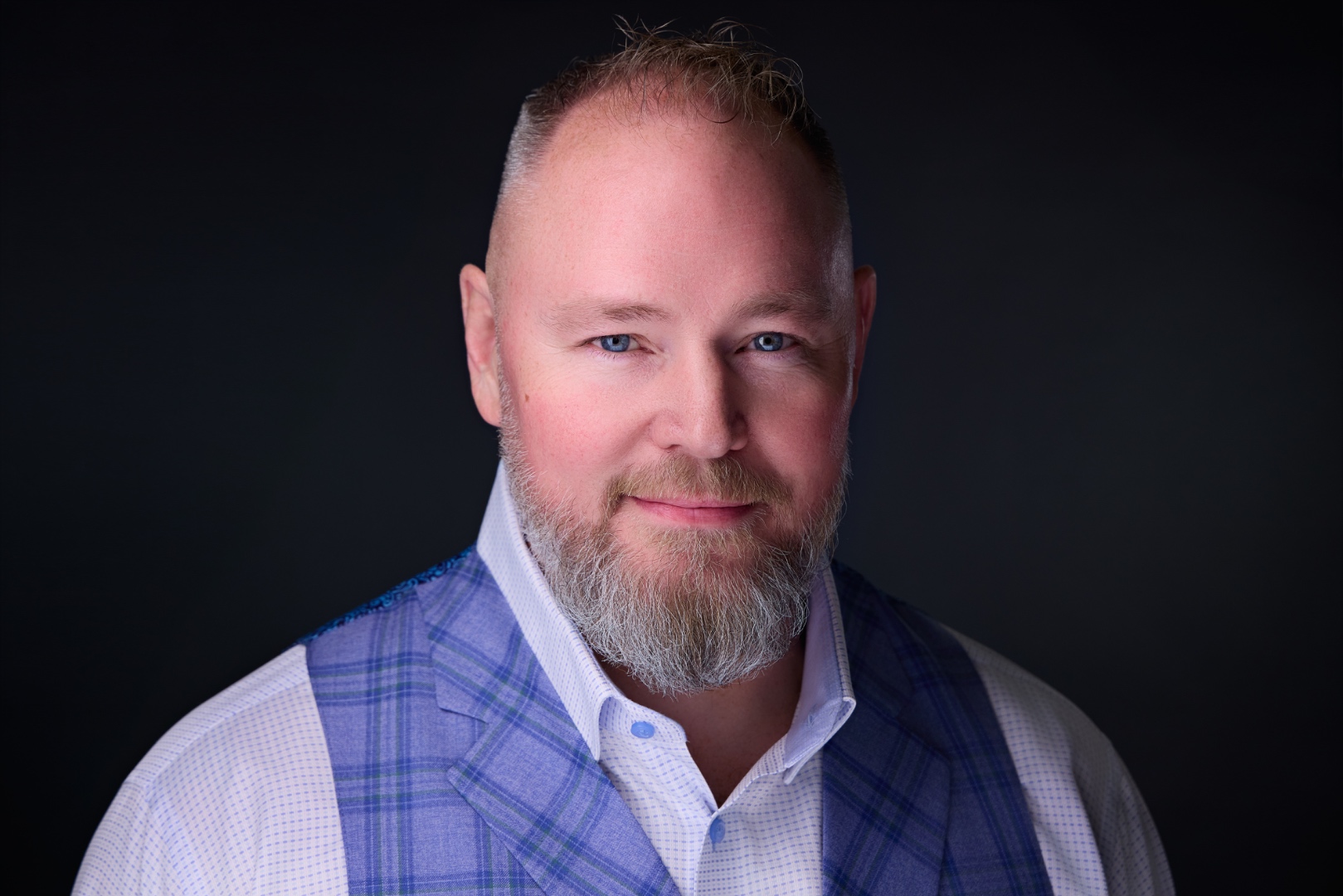
Jay Aldebert
Profit Architect. Chief Growth Officer of International Services Inc. Creator of The Aldebert Financial Ecosystem, built across 86,000+ diagnostics and $2 billion+ in recovered profit leaks.
More about Jay →This comparison reflects the opinions of Jay Aldebert based on publicly available information about the compared systems. Trademarks belong to their respective owners. No endorsement or affiliation is implied.